
from September 10, 2026
Lucia Tallová: Moving Clouds
Deutsche Bank "Artist of the Year" 2026
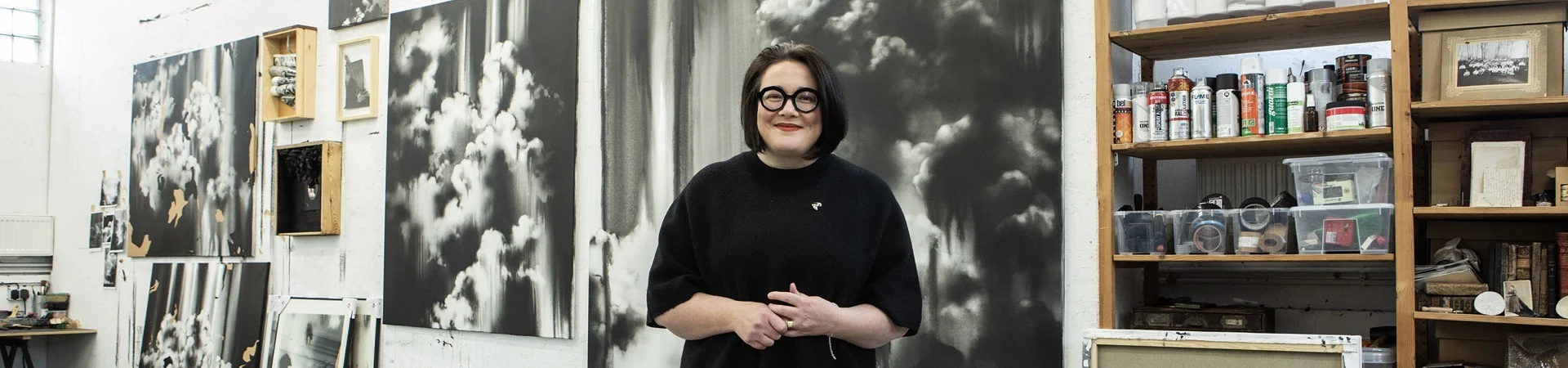
Deutsche Bank has named Lucia Tallová its “Artist of the Year” for 2026. To mark the occasion, the PalaisPopulaire in Berlin is presenting the first institutional solo exhibition in Germany devoted to the Slovak artist, born in 1985.
Lucia Tallová works across the fields of painting, collage, assemblage, and sculpture. Her scenographic, often room-filling installations resemble surreal tableaux. They explore memory and ideology, art history, as well as climate and the legacy of modernism. Tallová approaches these themes from a feminist perspective, tracing forgotten female histories. In doing so, she develops new forms of storytelling and archiving. She works exclusively in analog media, such as paper and photography.
The title of Lucia Tallová’s exhibition, Moving Clouds, evokes clouds that ceaselessly drift across the sky, embodying the constant cycle of growth and decay. In her work, “moving” also refers to an emotional, inner movement: being moved by the world, by its breathtaking beauty, as well as by its boundless destruction and exploitation. In this context, she simultaneously addresses another cycle: the eternally repeating rise and fall of male-dominated civilizations, cultures, and power structures. Tallová’s works reflect, on various levels, on the socialist past and the collapse of the Eastern Bloc, the aftermath of which she experienced as a child and teenager.
Show content of more
She finds the material for her works at flea markets and in antiquarian bookstores: in illustrated books about the 1974 Spartakiad, in fashion and film magazines from the 1950s, and in books about the temples and sculptures of classical antiquity. By cutting, layering, folding, and reconfiguring, the artist creates collages that always possess a sculptural, object-like quality. She extends this quality three-dimensionally into space. She allows abstract structures made of dyed, crumpled paper to spill out from her collages or combines the paper works with fragments of furniture, charcoal, branches, and stones to form assemblages. In doing so, she deliberately selects materials that have a patina or minor damage and bear traces of wear and tear. This conveys an idea that is as poetic as it is materialist: that history is inscribed in every form of matter, in every material, whether animate or inanimate.
Tallová’s work can be described as that of an archaeologist: a kind of artistic forensics that traces these narratives and connects them to one another. Painting is an essential element of her practice. The abstract compositions that the artist creates on canvas using black acrylic paint and ink are reminiscent of landscapes, clouds, or ash formations. She often combines these paintings with stage-like, minimalist constructions made of wooden slats, which evoke archives, art storage facilities, or cabinets of curiosities.
Tallová’s artistic practice is not only about remembering, but also about what is forgotten and repressed. In her universe, this is above all the history of women: female laborers, athletes, and models whose achievements and lives were not inscribed in the male-dominated canon of modernism and postwar modernism. The collages and assemblages are populated by female bodies and body parts that have become intertwined with all manner of architectures and monuments designed and built by men. Throughout the centuries, women have had to contort themselves to literally bear the burden of patriarchal histories and ideologies.
This becomes particularly clear in the installation Fragility of Caryatids (2025). It consists of a group of bent Ionic columns into which posterlike images of ancient female sculptures, mostly headless torsos, are wedged. Tallová alludes to the gender metaphors embodied in ancient architecture and sculpture. Caryatids are female sculptures that serve a loadbearing function in architecture, used in place of a column or pillar. Unlike their male counterparts, the Atlanteans, they must support the weight with grace, without showing any physical exertion. In Tallová’s version, they do not resign themselves to this fate.
Even as the artist plays with the idea that history repeats itself in different variations within the same cycles, her work has an anarchic and rebellious quality. The monolithic and monumental are countered by the fragmentary utopia of a feminine, non- hierarchical history—a world in which everything is interconnected and interdependent, where the cycles do not endlessly repeat the hardships and acts of violence of the past, but instead open up the possibility of a future for our planet.
Curator: Britta Färber, Global Head, Art & Culture, Deutsche Bank
Show content of The "Artist of the Year" award
Since 2010, Deutsche Bank has honored artists annually, thus offering a platform for new positions in contemporary art. The work of the “Artist of the Year” should be of social and artistic relevance, offer new perspectives on the present, and incorporate the media of paper and photography—the focal points of the Deutsche Bank Collection.
Artists for the award are proposed every two years by leading figures from the global art world. The “Artists of the Year” for 2026 were nominated by Sam Bardaouil and Till Fellrath, Directors of the Hamburger Bahnhof—Nationalgalerie der Gegenwart—Berlin, and founders of the curatorial platform Art Reoriented. From among these nominees, the bank’s curatorial team selected Lucia Tallová.
Learn more about Deutsche Bank "Artist of the Year" here.
Videos
-
Intro in German Sign Language
-
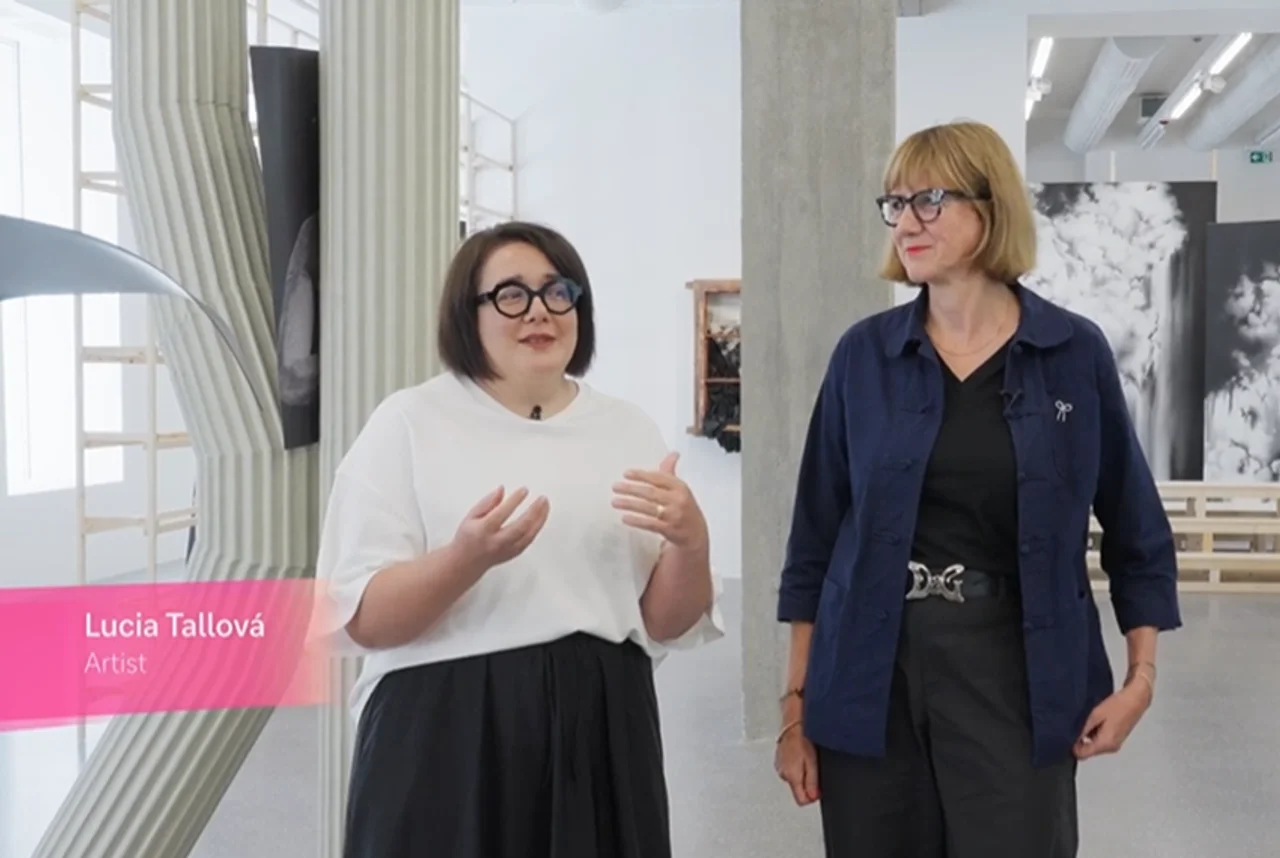
Intro
-
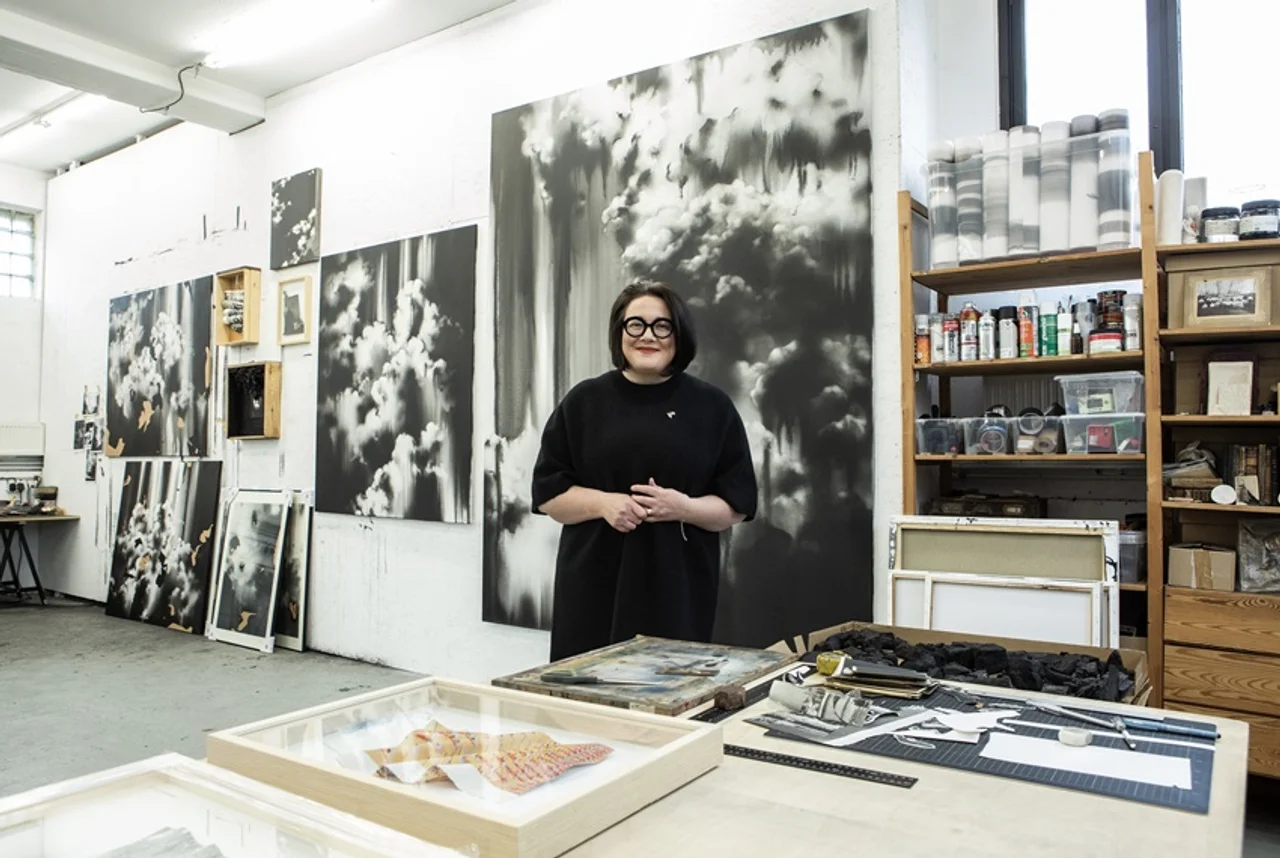
Trailer
Gallery

Installation view PalaisPopulaire 2026
© Lucia Tallová, Photo: Matthias Schormann

Lucia Tallová, Untitled, 2026
From the series „Unstable Monuments“
© Lucia Tallová

Installation view PalaisPopulaire 2026
© Lucia Tallová, Photo: Matthias Schormann

Lucia Tallová, Untitled, 2026
From the series „Unstable Monuments“
© Lucia Tallová

Installation view PalaisPopulaire 2026
© Lucia Tallová, Photo: Matthias Schormann

Lucia Tallová, Untitled, 2025
From the series „Unstable Monuments“
© Lucia Tallová

ActivityCard for children
Ready, set, go! Discover the artworks in the exhibition through our creative drawing offer, which you can color in front of the artwork, in the classroom or at home. Ask for the current ActivityCard at the museum counter or print it out here:
ActivityCard
Stage: Lucia Tallová, Photo: Miro Nota