
March 20 – August 17, 2026
Seeing Words, Reading Images
The Written Art Collection in dialogue with the Deutsche Bank Collection
The Written Art Collection is one of the most important private collections of contemporary written art. Encompassing around 400 works, it includes art from Europe, North America, East Asia, and the Middle East. The spectrum ranges from gestural abstract painting after 1945 to contemporary calligraphy and the diverse forms of expression found in global conceptual and media art.
The exhibition Seeing Words, Reading Images brings together positions from the Written Art Collection with selected works from the Deutsche Bank Collection, one of the leading corporate collections of contemporary works on paper, in a multifaceted dialogue. The starting point is the relation between writing and image—as line, informal gesture, handwriting and calligraphy, typography, or the written image. The focus is on the significance of written art as a medium of global understanding and on the boundless visual and textual possibilities of storytelling, whether in poetry, political criticism, or the engagement with history. Thematic sections allow visitors to experience different aspects of the art of writing.
Curated by Marie-Kathrin Krimphoff, Curator Written Art Collection, and Svenja Gräfin von Reichenbach, Director PalaisPopulaire
Show content of more
The exhibition opens with Lawrence Weiner’s installation THE GRACE OF A GESTURE (2010). Weiner, who has been regarded as a pioneer of conceptual art since the late 1960s, demonstrates how the traditional separation of writing and image, literature and artwork can be overcome and how an entire place can be incorporated into an artwork through a reduced gesture. This creates a temporary, conceptual form of poetry and communication.
Karin Sander’s work wordsearch gives its name to the first section. The project, a “translinguistic sculpture,” initiated by Deutsche Bank in 2002, she translated all the languages spoken in New York City into a lexical, poetic artwork published in The New York Times. The connection between concept and poetry is also evident in Herta Müller’s word collages and the lyrical leporellos of poet and artist Etel Adnan.
The “Ulysses” section addresses forms of storytelling, for example, in the surreal homage to James Joyce by Marcel Dzama, in the donkey monument dedicated to the folk hero, buffoon, and moral critic Molla Nasreddin by the art collective Slavs and Tatars, and in Yinka Shonibare’s library sealed with wax cloth.
“Map of Utopia” is dedicated to artistic counter-designs to historical cartography. In his animated video work Anti-Mercator (2010–2011), William Kentridge shows how scientific surveying can become an instrument of colonial power. Similarly, Qiu Zhijie undertakes the paradoxical attempt, through his project Mapping the World, to translate as much as possible into map form, creating, for example, artistically inked sheets depicting false prophets, historical losers, and past or future utopias.
In the section “The Home of My Eyes,” the theme is home and exile. It is named after a portrait series photographed in 2015 by Shirin Neshat. For this project, she interviewed fifty-five people from Azerbaijan, a country where different ethnicities, religions, and languages converge, about their feelings of home. The responses are associated with uprooting, loss, and grief. They were translated into Farsi and then written calligraphically over the portraits like a gossamer fabric.
The “Small Right Hand Down” section addresses democracy and human rights. This is evident in the work of Wong Hoy Cheong, for example in the series Study for Colonies Bite Back (2010), in which colonial literature is offered to a swarm of termites to be consumed. It is also present in Jenny Holzer’s Redaction Paintings (2005–2008), which are based on heavily redacted US government documents concerning war crimes that were released after the Iraq War.
The final section, “Seelenfenster,” leads into the world of gesture. In the installation of the same name by Rebecca Horn, image, writing, drawing, poetry, and spatial installation merge into one another. Her works are often described as “ciphers,” poetic signs that create a magical atmosphere. Her oeuvre explores the dissolution of boundaries between body, machine, and space. The abstracted calligraphic forms in the 1972 paintings by Hossein Zenderoudi are similarly transcendent. In the modern calligraphy of Shiryū Morita, writing and signs become gestural images that we can intuitively “read.”
Show content of Artists
Etel Adnan, Mounira Al Solh, Siah Armajani, Joseph Beuys, Osman Bozkurt, Natalie Czech, Claudia Comte, Marcel Dzama, Larissa Fassler, Meschac Gaba, Ellen Gallagher, Jenny Holzer, Rebecca Horn, Yūichi Inoue, On Kawara, Annette Kelm, William Kentridge, Imi Knoebel, Ahmed Mater, Herta Müller, Shiryū Morita, Shirin Neshat, Qiu Zhijie, Karin Sander, Viviane Sassen, Yinka Shonibare, Slavs and Tatars, Agathe Snow, Lawrence Weiner, Wong Hoy Cheong, Yang Jiechang, Charles Hossein Zenderoudi.
Show content of Written Art Collection
The Written Art Collection is one of the most significant private collections of contemporary script-based art. With around 400 works by nearly 200 artists, it includes works from Europe, North America, the Near and Middle East, and East Asia. Its art-historical range extends from Western gestural-abstract painting after 1945 to contemporary calligraphy and diverse forms of today's global conceptual and media art.
Show content of Deutsche Bank Collection
For more than 45 years, Deutsche Bank has been encouraging and supporting new artistic talent and original ideas through a wide range of initiatives. The concept focuses on works on paper and photography by international contemporary artists. The collection provides access to contemporary art, opening up new perspectives on social, cultural, and aesthetic issues. The bank's involvement in art is a pillar of its Art & Culture division.
Video
-
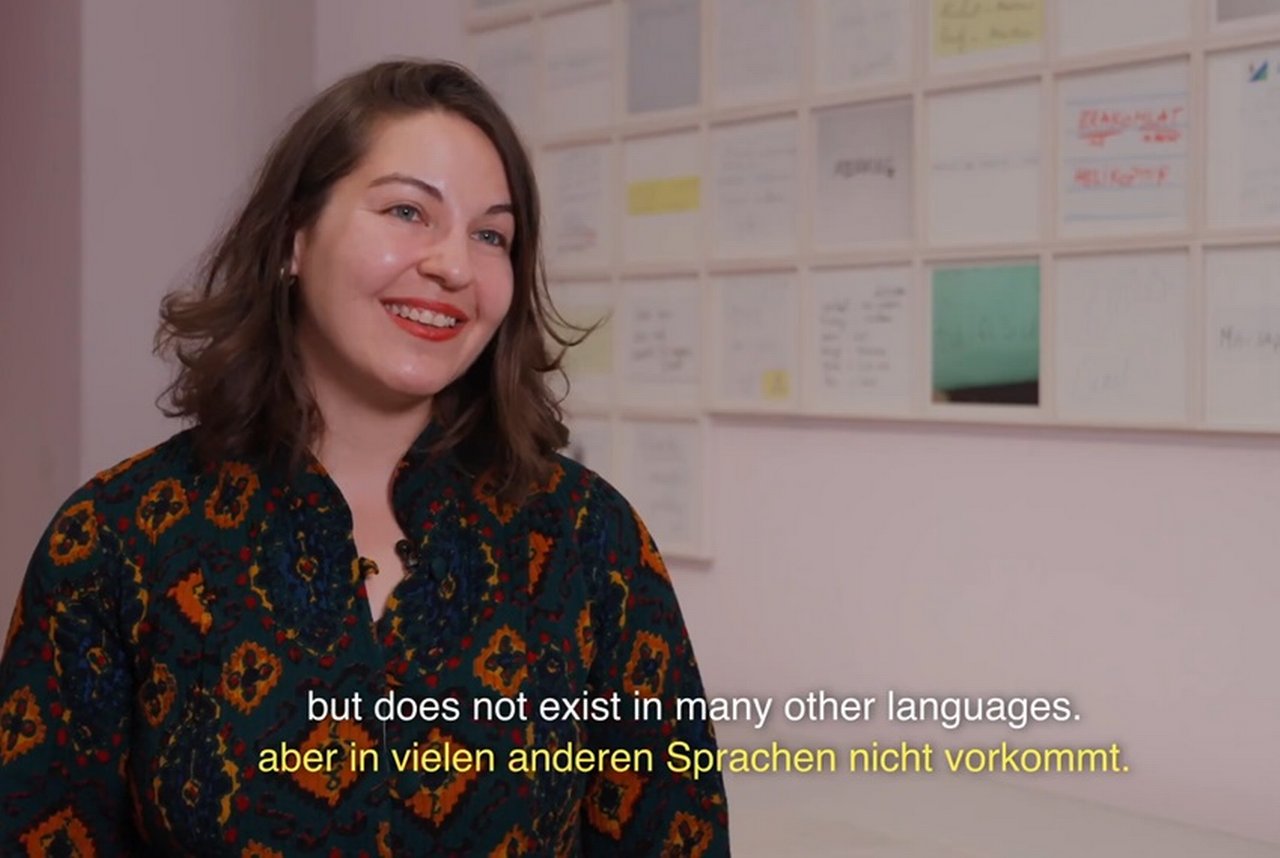
Our Favourites: Karin Sander "wordsearch" (2002)
with Irem, visitor of the exhibition
-
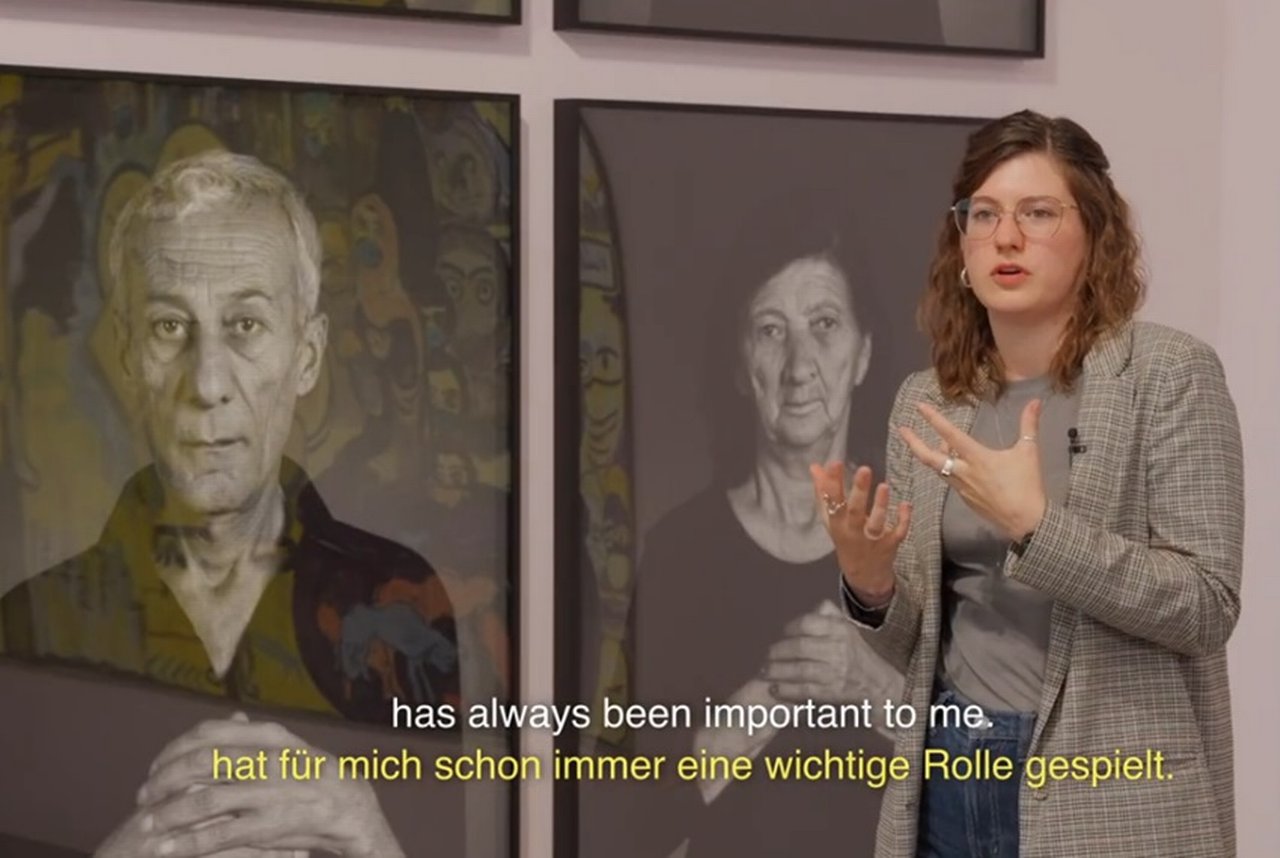
Our Favourites: Shirin Neshat "Home of My Eyes" (2015)
with Sophie Heldt, member of the PalaisPopulaire team
-
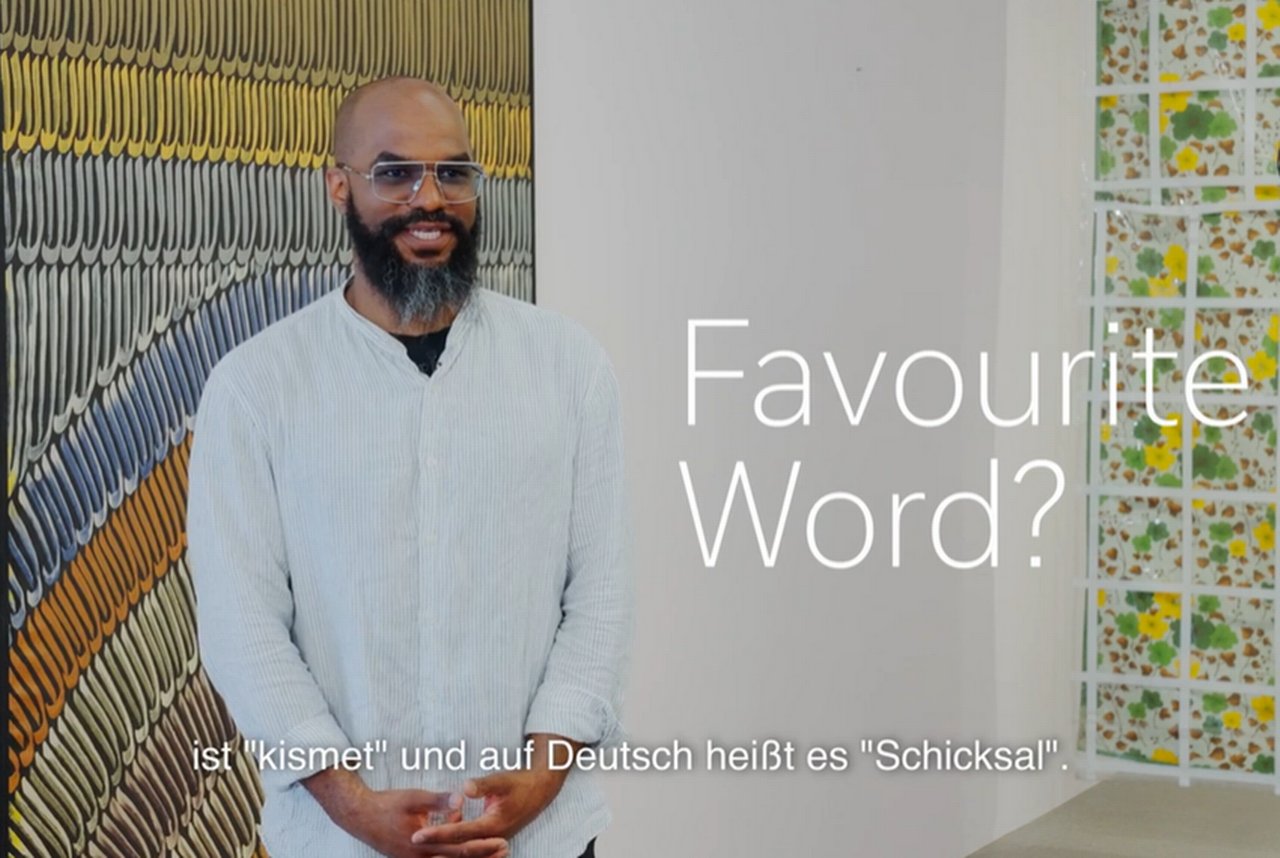
Our Favourites: Charles Hossein Zenderoudi "Chucavira" (1985)
with Akinwande, visitor of the exhibition
-
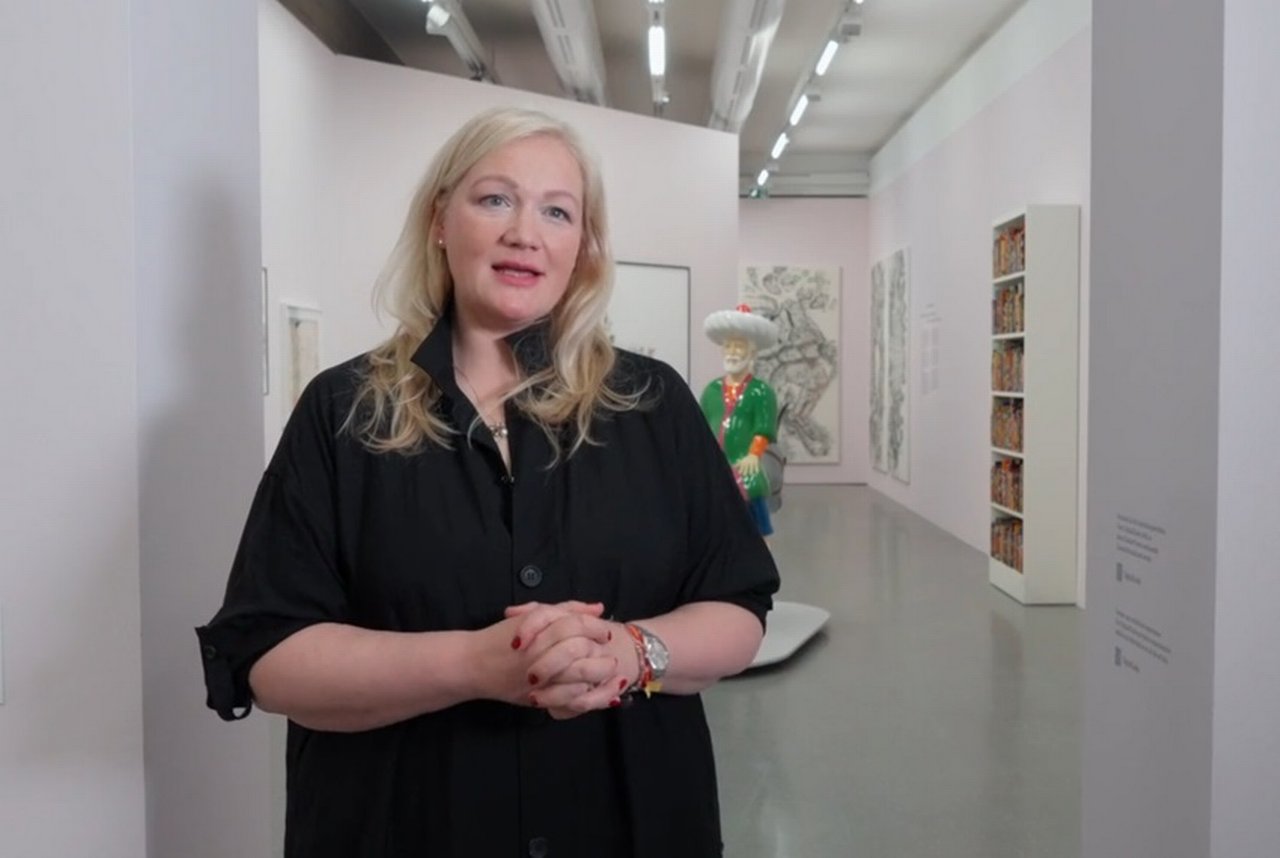
Intro Seeing Words, Reading Images
with curators Marie-Kathrin Krimphoff, Curator Written Art Collection, and Svenja Gräfin von Reichenbach, Director PalaisPopulaire
Gallery
-

Lawrence Weiner, THE GRACE OF A GESTURE, 2010 © Lawrence Weiner Estate/VG Bild-Kunst Bonn 2026. Photo: Mathias Schormann
Written Art Collection -

Installation view, PalaisPopulaire 2026, Photo: Mathias Schormann
-

Installation view, PalaisPopulaire 2026, Photo: Mathias Schormann
-

Rebecca Horn, Seelenfenster, 2012 © VG Bild-Kunst, Bonn 2026. Photo: Mathias Schormann
-

Karin Sander, wordsearch, 2002. A translinguistic sculpture © VG Bild-Kunst, Bonn 2026. Courtesy of the artist and Esther Schipper Berlin/Paris/Seoul. Photo: Mathias Schormann
Sammlung Deutsche Bank
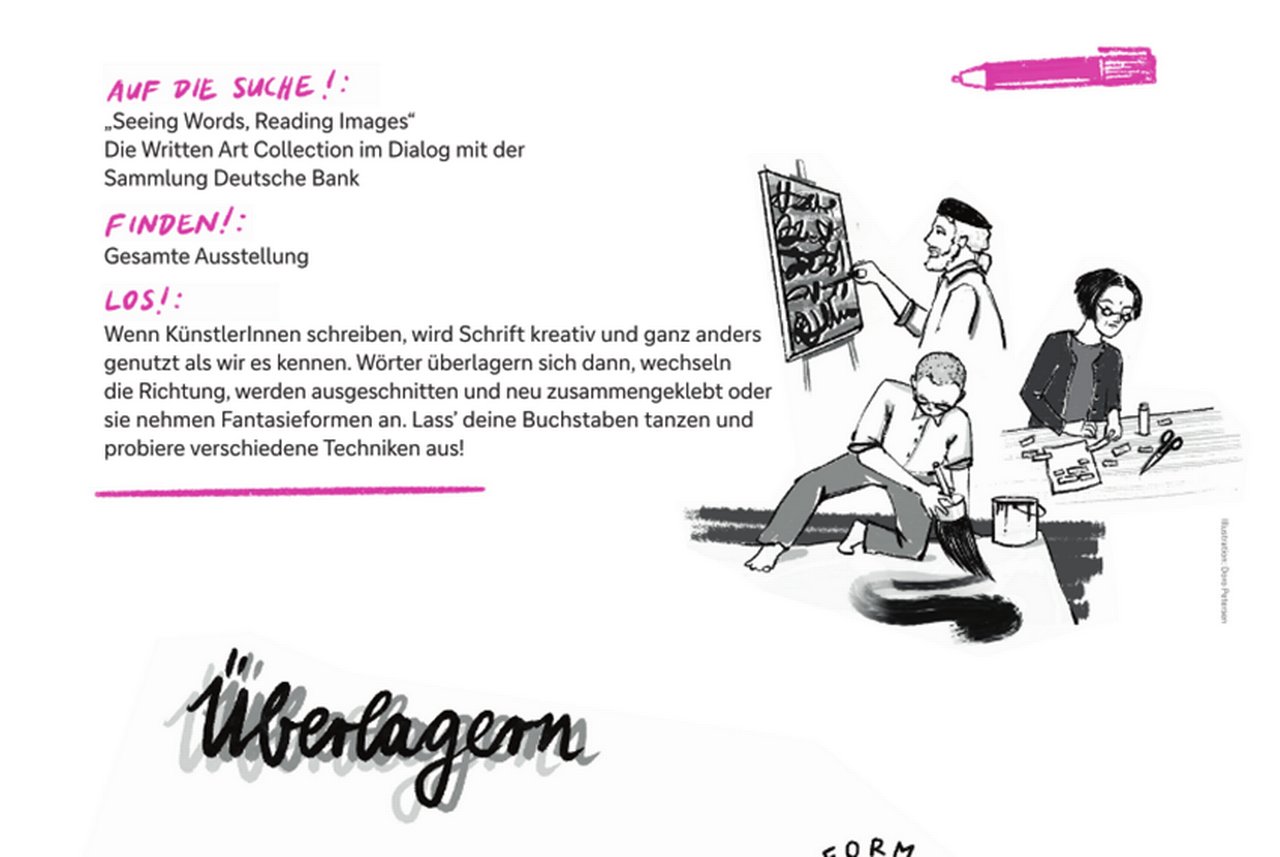
ActivityCard
Ready, set, go! Discover the artworks in the exhibition through our creative drawing offer, which you can color in front of the artwork, in the classroom or at home. Ask for the current ActivityCard at the museum counter or print it out here:
Stage: Etel Adnan, The Linden Tree Poems (Detail), 2019 © VG Bild-Kunst, Bonn 2026. Courtesy the Artist and Sfeir-Semler Gallery